

How to Ship My Car
So you need to ship your car. Maybe you are moving, maybe you bought one online, or maybe you are sending it to a family member. Whatever the reason, the process is the same, and it is simpler than it looks.
This is the practical, no-fluff version. What to do first, what to watch out for, and how to avoid the mistakes that cost first-timers money and patience.
You do not need to become an expert. You just need to follow the steps in order and know which details actually matter.
Step One: Figure Out What You Need
Start with the basics of your shipment. Where is the car now, where does it need to go, and when? The answers shape everything else, including the price.
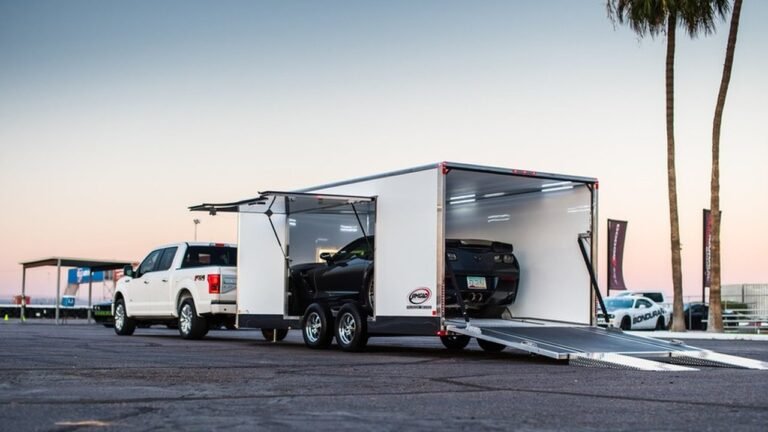
Next, decide between open and enclosed transport. Open is the standard multi-car trailer and the right choice for nearly every daily driver. Enclosed costs 40 to 60 percent more and makes sense for luxury, classic, or exotic vehicles.
Also decide whether you need door to door service or can use terminals. Door to door is more convenient and what most people choose. Terminals can save a little money if you live near one and do not mind the extra trips.
If the terminology is tripping you up, the car transport guide for beginners explains every term in plain language.
Step Two: Get Multiple Quotes
Get three to five quotes from different companies. This is the single most useful thing you can do, because it shows you the real price range for your route and exposes outliers.
Provide identical details to each company: pickup and delivery ZIP codes, vehicle year, make, and model, whether it runs and drives, and your target dates. Different inputs produce different quotes, which makes comparison impossible.
Expect a range rather than a single number. Most companies quote a window because the final rate depends on carrier availability around your dates. A quote that is dramatically lower than the rest is a red flag, not a bargain.
A healthy set of quotes usually clusters within $100 to $200 of each other for the same route and dates. If four quotes land near $1,100 and one comes in at $650, the odd one out almost certainly lacks a real carrier assignment. Ask that broker which carrier will actually move your car before you pay anything.
Run your numbers through a car shipping cost calculator first so you know the ballpark before anyone tries to sell you. Knowing the fair range is what keeps you from overpaying.
Step Three: Vet the Companies
A good price from a bad company is the most expensive mistake in car shipping. Check every company you are considering before you give anyone a deposit.
Look up their USDOT and MC numbers on the FMCSA website to confirm they are authorized to operate. Then read recent reviews on Google and the Better Business Bureau. Patterns matter more than any single review.
Call your top two or three choices. Ask how they handle delays, what their insurance covers, and what happens if no carrier accepts your load at the quoted price. The quality of the answers tells you everything about how they operate.
Write down the answers from each company so you can compare them later. Note the company name, the person you spoke with, the date, and the quoted price and pickup window. This record is useful if the final price changes or if you ever need to file a complaint with the FMCSA.
Never pay the full balance upfront. The standard structure is a small deposit at booking and the rest on delivery. A company demanding everything in advance is waving a red flag.
Step Four: Book With Sensible Timing
Book two to three weeks before your first available pickup date. That window gives brokers enough time to match your car with a good carrier at a fair price without rush fees.
Booking months ahead rarely helps, because carriers price their loads a few weeks out. Booking with only days to spare usually costs more and limits your choice of carriers.
Be flexible on exact pickup dates if you can. A pickup window of a few days instead of a single day gives the broker more carriers to choose from, which usually means a better price.
For the complete booking sequence with nothing left out, see how to ship a car step by step.
Step Five: Prepare the Car
Wash the car and photograph it from every angle, including close-ups of any existing damage. These photos are your evidence if anything happens in transit, so do not skip this.
Take at least a dozen photos: all four sides, all four corners, the roof, the hood, the trunk, and the interior. Make sure the photos carry a date, and keep them on your phone until delivery is signed off.
Remove personal belongings beyond what the carrier allows. Most companies permit up to 100 pounds in the trunk, but those items are not insured. Take out anything valuable, plus toll tags and parking passes.
Leave the tank about a quarter full, check the tire pressure, and make sure the battery is charged and the alarm is disabled. If the car has quirks, like a tricky ignition or a specific way to release the parking brake, write them down for the driver.
Gather your documents: registration, proof of insurance, and a photo ID. You generally do not need the title in hand, but have your paperwork organized anyway.
Step Six: Handle Pickup Day Right
The driver will call a few hours before arrival. Be reachable, and have someone you trust available as backup if you cannot be there yourself. Whoever meets the driver needs authority to sign the paperwork.
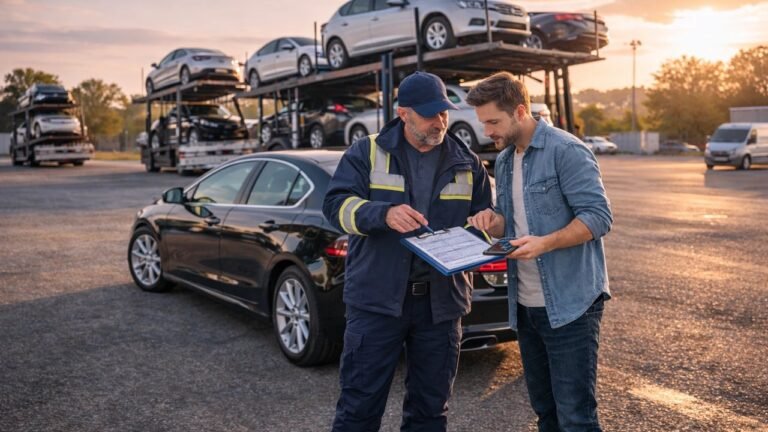
Walk around the car with the driver and record every mark on the bill of lading. This inspection report is the most important document in the whole process. Take your time with it.
Large trucks cannot always reach your exact address, so be prepared to meet at a nearby lot or wide street. This is normal and not a sign of a problem.
Get the driver’s direct number before they leave. If you want to check on your car during transit, that number is how you do it. AAA also recommends keeping all transport paperwork together in one place until delivery is complete.
Step Seven: Inspect at Delivery
When the driver calls to arrange delivery, try to receive the car in daylight. Compare its condition carefully against the pickup bill of lading and your photos.
If you spot new damage, write it on the bill of lading before you sign and photograph it immediately. Then notify the company right away to start the claims process. Damage is uncommon, but this paperwork is what makes claims succeed.
Pay the remaining balance by the agreed method, collect your signed copy of the delivery paperwork, and you are finished. The whole delivery usually takes just a few minutes.
Different vehicles sometimes need different handling, so if you are shipping something unusual, check the vehicle shipping guide for vehicle-specific advice.
Common Mistakes First Time Shippers Make
The most expensive mistake is booking the lowest quote without checking anything else. A quote that sits hundreds of dollars below the rest usually means the broker has not lined up a carrier at that price. Your pickup gets delayed while they come back asking for more money to move the car.
Another common one is leaving personal belongings in the car. Carriers cap what you can leave inside, usually around 100 pounds, and none of it is covered by insurance. Electronics, documents, and anything valuable should travel with you, not in the trunk.
Skipping the inspection paperwork is a quiet mistake that only hurts if something goes wrong. If you sign the bill of lading without walking around the car, you lose your leverage for a damage claim later. Take ten minutes, note every scratch, and photograph everything.
Finally, do not lock yourself into a single pickup date if you can avoid it. A one-day window shrinks the pool of available carriers and often raises the price.
A three to five day window gives brokers room to find a carrier at a fair rate. If you want help reading your estimates side by side, see compare car shipping quotes before you commit.
What It Will Cost You
For a running sedan on an open carrier, most shipments land between $550 and $1,800. Your position in that range depends mostly on distance, with vehicle size, route, and season adjusting it up or down.
SUVs and trucks typically add $100 to $300. Enclosed transport adds 40 to 60 percent. Non-running vehicles add roughly $100 to $200 for the winch work.
For current ranges broken down by route type, see our auto transport cost breakdown.
Common First-Timer Worries
Most first-timers worry about damage, and the worry is understandable but usually overblown. Damage claims are rare, carriers carry cargo insurance, and the bill of lading inspection protects you. Photograph your car well and the risk becomes minimal.
Another common worry is timing. Delivery dates in auto transport are estimates, not guarantees, because trucks deal with weather, traffic, and multi-car routes. Build a buffer of a few days into your plans and the uncertainty stops mattering.
Some people worry their car will be driven. It will not be. Cars ride on the trailer, and the odometer reading at delivery should essentially match the reading at pickup. If it does not, that is worth asking about.
Frequently Asked Questions
How long does it take to ship my car?
It depends on distance. A few hundred miles takes 1 to 3 days in transit, while coast to coast takes 7 to 10 days. Add a few days on each end for the pickup and delivery windows, which depend on carrier schedules.
Do I need to be present at pickup and delivery?
You or an authorized person needs to be there to sign the bill of lading and hand over the keys. Many people have a friend, family member, or neighbor handle it. Just make sure they know to do the inspection carefully.
Is my car insured during shipping?
Yes. Carriers must carry cargo insurance covering vehicles in transit. Ask for proof before booking. Note that personal items left inside the car are not covered, so keep valuables out.
Can I ship a car that does not run?
Yes, but it costs more and takes longer to arrange. Non-running cars need a winch for loading, which adds about $100 to $200 and limits the pool of carriers that can take the job. Be upfront about the condition when getting quotes.
What is the cheapest way to ship my car?
Open transport on a popular route with flexible dates is the cheapest reliable combination. Avoid the lowest quote in your set of estimates, since it usually signals a broker who has not secured a carrier at that price.
Should I choose open or enclosed transport?
For a normal daily driver, open transport is the right call. It is how dealerships receive new cars, and it costs 40 to 60 percent less than enclosed. Enclosed is worth the money for luxury, classic, exotic, or freshly restored vehicles that need protection from weather and road debris.
What happens if my car is damaged in transit?
Damage is rare, but if it happens, note it on the bill of lading before you sign and photograph it right away. Then contact the company promptly to open a claim with the carrier’s cargo insurance. Your pickup inspection paperwork and photos are what make the claim succeed.
Can I track my car while it is being shipped?
Most companies give you the driver’s direct phone number, and calling for updates is the norm. Some brokers offer online tracking portals, but direct contact with the driver usually gives you the freshest information. Expect general location updates rather than exact minute-by-minute positions.
That is the whole process. Quotes, vetting, booking, prep, pickup, delivery. None of the steps are hard, and doing them in order is what separates a smooth shipment from a stressful one.




2 Comments