Can You Ship a Car by Train
When people picture car shipping, they picture trucks. But cars also move by rail, and on certain routes the train is a legitimate option worth knowing about.
Rail transport works differently from truck transport in almost every way: the scheduling, the pricing, the routes, and who it serves best. This guide covers where trains fit in and when they make sense for you.
For most people, the train will not replace the truck. But for the right trip, it is worth a serious look.
How Rail Car Transport Works
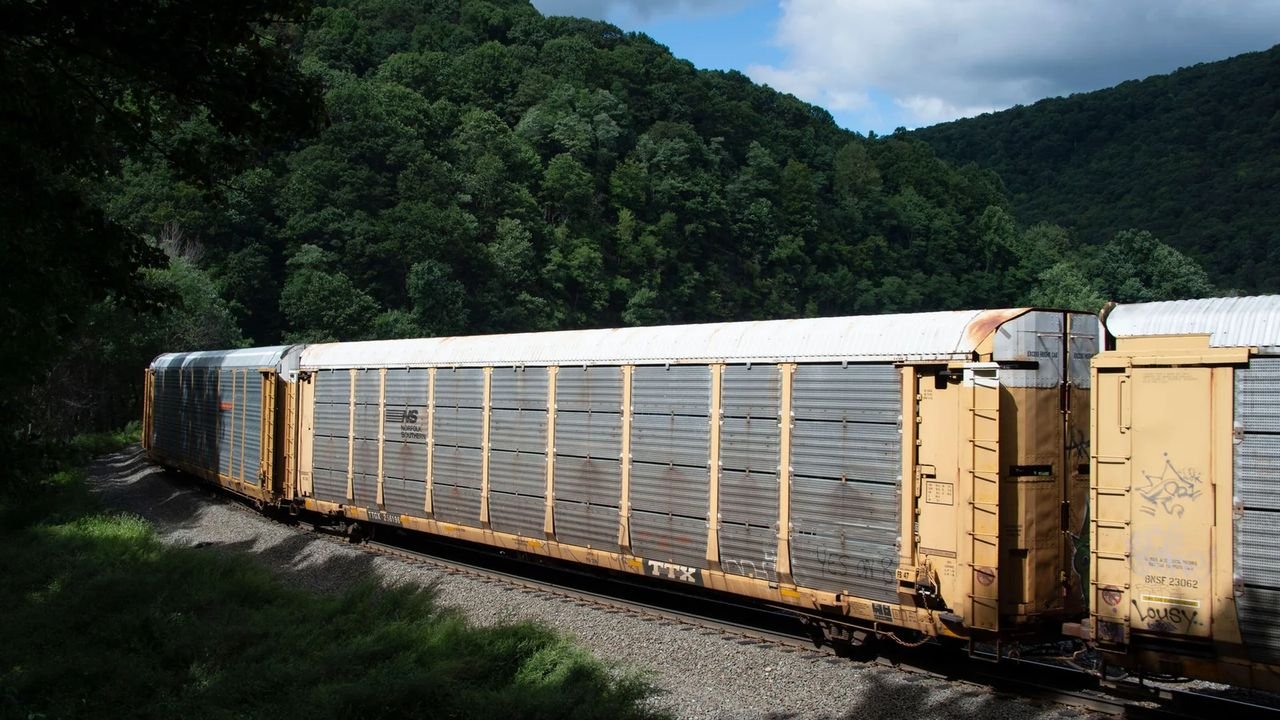
Cars travel by rail in specialized railcars called autoracks: enclosed multi-level cars designed to hold vehicles. You have probably seen them rolling through rail yards, stacked with new cars heading to dealerships.
The vast majority of rail vehicle transport serves manufacturers and dealers moving new cars in bulk. Individual consumers shipping a single car by rail is much less common, but it exists in specific forms.
Rail moves on fixed schedules between terminals, not door to door. Your car travels from one rail terminal to another, and you handle getting it to and from those terminals. This terminal-to-terminal structure is the defining constraint of rail shipping.
The Amtrak Auto Train
The best-known consumer rail option in the United States is the Amtrak Auto Train. It runs daily between Lorton, Virginia, near Washington DC, and Sanford, Florida, near Orlando. It is a nonstop overnight trip, and passengers ride the same train as their cars.
Here is how it works: you drive to the Lorton terminal, check in your car, board the train as a passenger, sleep overnight in a coach seat or sleeper, and collect your car in Sanford the next morning. The reverse works the same way going north. Check-in typically opens in the afternoon and closes well before departure, so plan to arrive early rather than cutting it close.
Pricing bundles the vehicle and passenger fares. Vehicle charges typically run a few hundred dollars each way, with passenger fares on top depending on whether you book a coach seat or a sleeper. For snowbirds doing the Northeast to Florida run, the total often compares favorably with driving or flying plus truck transport.
The limitation is obvious: it serves exactly one route. If your trip is anywhere near the DC to Florida corridor, it is worth pricing. Anywhere else, it does not apply. Check current schedules and fares on Amtrak’s site, since timetables and pricing change.
Freight Rail for Consumers
Beyond Amtrak, freight railroads move enormous numbers of vehicles, but almost entirely for automakers and large dealers. As an individual, you generally cannot book a single car onto a freight autorack the way you book a truck.
Some vehicle logistics companies use rail as part of longer multimodal moves, combining rail for the long haul with trucks for the first and last miles. This is more common for corporate relocations and dealer transfers than for individual consumers.
If a transport company offers you a rail-inclusive quote, ask exactly which segments are rail and which are truck, and how the handoffs work. Multimodal moves add transfer points, and each transfer is a place where scheduling can slip.
Pros of Shipping by Train
Cost on served routes
Where rail service exists for consumers, it can be very competitive. The Auto Train bundles your travel and your car’s travel into one price, which beats the combined cost of flying and truck transport for many snowbirds.
Predictable scheduling
Trains run on fixed timetables. Once your car is on the train, the arrival time is far more predictable than a truck’s multi-stop route. For planning purposes, that certainty has real value.
Low wear and no added miles
Like truck transport, rail adds essentially no miles to your car. Your vehicle rides as cargo, secured in the autorack, and arrives with the odometer unchanged.
Comfort
On the Auto Train specifically, you travel with your car. For people who dislike flying or do not want to make the long drive, the overnight train is genuinely pleasant.
Cons of Shipping by Train
Extremely limited routes
This is the dealbreaker for most people. Consumer rail car transport in the US is effectively one route. If your trip does not touch the DC-Florida corridor, the train is not an option.
Terminal to terminal only
You must get your car to the departure terminal and collect it from the arrival terminal. For the Auto Train, that means driving to Lorton or Sanford. Factor in that driving time and any overnight stays.
Advance booking required
Auto Train vehicle spaces are limited and sell out, especially in snowbird season. Booking weeks or months ahead is normal. Last-minute availability is unreliable.
Vehicle restrictions
Size and height limits apply. Standard cars, SUVs, and small trucks are fine, but oversized vehicles, roof cargo, and some modified cars may not fit. Check the current vehicle requirements before assuming yours qualifies.
Train vs Truck: Honest Comparison
Availability is the whole comparison for most people. Truck transport serves every route in the country, door to door. Rail serves one consumer corridor, terminal to terminal. If the train does not serve your route, the comparison is over.
Where both exist, cost is usually close enough that other factors decide. The Auto Train’s bundled passenger fare can make it the cheaper total trip for snowbirds who would otherwise fly and ship the car separately.
Timing favors the train’s predictability against the truck’s flexibility. The train leaves on schedule and arrives on schedule. The truck comes to your door but on a window, not an appointment.
For the truck side of this comparison, our how car shipping works guide covers the process, and transit times gives realistic truck timelines.
Train vs Driveaway
Driveaway is the other alternative people consider. A driver drives your car to its destination, which works on any route but adds miles and wear.
The train adds no miles and lets you ride along, but only on its one route. Driveaway goes anywhere but puts a stranger behind your wheel for days. Different tradeoffs for different priorities.
Our driveaway service guide breaks down that option in full, including costs and how to vet a driveaway company.
How to Book the Auto Train
Book directly through Amtrak, well in advance. You will need your vehicle details, including dimensions, since size limits apply. Passenger accommodations range from coach seats to private sleepers.
Arrive at the terminal within the check-in window with a car that meets the requirements: no roof cargo, within size limits, and in running condition. Amtrak staff direct the vehicle loading. You do not drive it onto the train yourself. Leave yourself a comfortable gas margin for the drive to the terminal and the drive home from the other end.
Pack an overnight bag for the passenger portion. Your car is inaccessible during the trip, so anything you need overnight comes with you into the passenger cars. Medications, chargers, and valuables should ride with you, since the autorack stays locked for the entire journey.
At arrival, collect your car at the terminal and inspect it before leaving, just as you would with truck delivery. Note any issues immediately.
What About International Rail
International car shipping is overwhelmingly done by ocean freight, not rail. Rail enters the picture for cross-border moves within North America in commercial contexts, but consumers shipping cars overseas use container or roll-on/roll-off ocean services.
If your move involves Canada or Mexico, truck transport handles the cross-border leg in nearly all consumer cases. Rail is a commercial logistics tool on those corridors, not a consumer booking option.
When Rail Makes Sense and When It Does Not
Rail makes sense in one clear situation: your trip starts and ends near the Auto Train’s two terminals. If you live along the I-95 corridor between Washington DC and Orlando, or you are visiting there, the train deserves a serious price check.
The math gets interesting when you are traveling anyway. A snowbird who would otherwise fly south and ship the car separately can often beat that combined cost with the Auto Train. You get one booking, one schedule, and your car travels with you.
Rail also suits people who value schedule certainty over flexibility. Trucks run on pickup windows that can shift by days, while the train departs and arrives on a published timetable. If your arrival date is fixed, that predictability is worth something.
It does not make sense for almost any other trip. If your route is Dallas to Phoenix, Chicago to Denver, or anywhere else the train does not run, there is no consumer rail option to consider. Do not spend time pricing something that does not exist.
It also makes poor sense when the terminals add too much driving. If reaching Lorton takes five hours each way, the terminal-to-terminal model eats the savings fast. In that case, door-to-door truck transport or a driveaway driver usually wins on total effort.
One more factor is how much you dislike the alternatives. If flying is unpleasant and the drive is too long, the overnight train becomes attractive for comfort reasons alone. Plenty of snowbirds book it for the experience as much as the price.
The quick test is simple: check your route against the corridor, then compare the train’s total against a truck quote. Our cross-country shipping cost figures and the cheapest way to ship a car guide give you honest truck numbers to weigh against the rail fare.
Frequently Asked Questions
Can I ship my car by train in the US?
As a consumer, your realistic option is the Amtrak Auto Train between Lorton, Virginia and Sanford, Florida. Freight railroads move vehicles in bulk for manufacturers and dealers, but individuals generally cannot book single cars on freight autoracks.
How much does the Amtrak Auto Train cost?
Vehicle charges typically run a few hundred dollars each way, plus passenger fares for coach or sleeper accommodations. The bundled total often compares well against flying plus truck transport for the same trip. Check Amtrak for current pricing.
Is shipping by train cheaper than by truck?
On the route it serves, the Auto Train can be very competitive, especially when you factor in that you travel with the car. As a general method, though, rail is not available enough to be a price competitor with trucks nationally.
How long does train shipping take?
The Auto Train is an overnight trip, roughly 17 hours terminal to terminal. That predictability is one of its strengths. Freight rail timelines vary by corridor and are not really a consumer product.
Can I ship an oversized vehicle by train?
Probably not on the Auto Train, which has strict size and height limits. Standard cars, SUVs, and small trucks fit. Check current vehicle requirements before booking, and use truck transport with an appropriate trailer for anything oversized.
Do I need to be a passenger to ship my car on the Auto Train?
Yes. The Auto Train carries vehicles together with their owners, not as standalone freight. You book a passenger ticket for yourself and add your vehicle to the same reservation. There is no option to send the car alone.
Can I leave luggage or personal items in my car on the train?
Amtrak allows personal items in your vehicle, but the car is locked and inaccessible for the entire trip. Pack an overnight bag with everything you need, including medications and chargers, and take it into the passenger cars. Roof cargo and items strapped outside the vehicle are not permitted.
What happens if I miss the vehicle check-in window?
You risk losing your vehicle space, since boarding is scheduled tightly and the train runs on a fixed timetable. Arrive with plenty of margin, especially during busy season. If you are delayed, contact Amtrak immediately to see what can be rebooked.
The train is a niche tool, but niches exist for a reason. If your trip fits the Auto Train corridor, price it seriously. If not, the truck remains the workhorse, and our auto transport cost breakdown and cost calculator will help you plan that route. The FTC also has general guidance on evaluating transportation services that applies whatever method you choose.