Ship a Car Overseas
Shipping a car across an ocean feels like a different universe from hiring a truck to move it three states over. It is, in some ways. Your car leaves the highway system entirely, crosses water on a ship the size of a small town, and clears customs in a country that may never have seen a vehicle like yours.
In other ways it is surprisingly routine. Cars cross oceans by the hundreds of thousands every year. Auto carriers run fixed sailing schedules between major ports, and the process follows the same sequence every time.
This guide covers the two main shipping methods, what overseas shipping typically costs, the paperwork involved, and how to avoid the traps that catch first-time shippers. If you want the basics of how the industry works first, start with how car shipping works before going deeper.
The Two Ways Your Car Crosses the Ocean
Every overseas car shipment uses one of two methods. The right choice depends on your destination, your budget, and what you are shipping.
RoRo is the workhorse of international vehicle transport. Container shipping is the premium option. Understanding the difference is the single most useful thing you can do before requesting a quote, because quotes for the two methods are not really comparable.
Roll on Roll Off Shipping
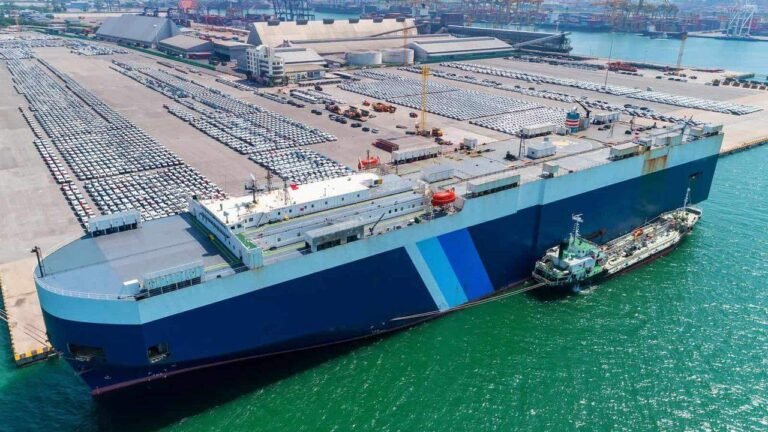
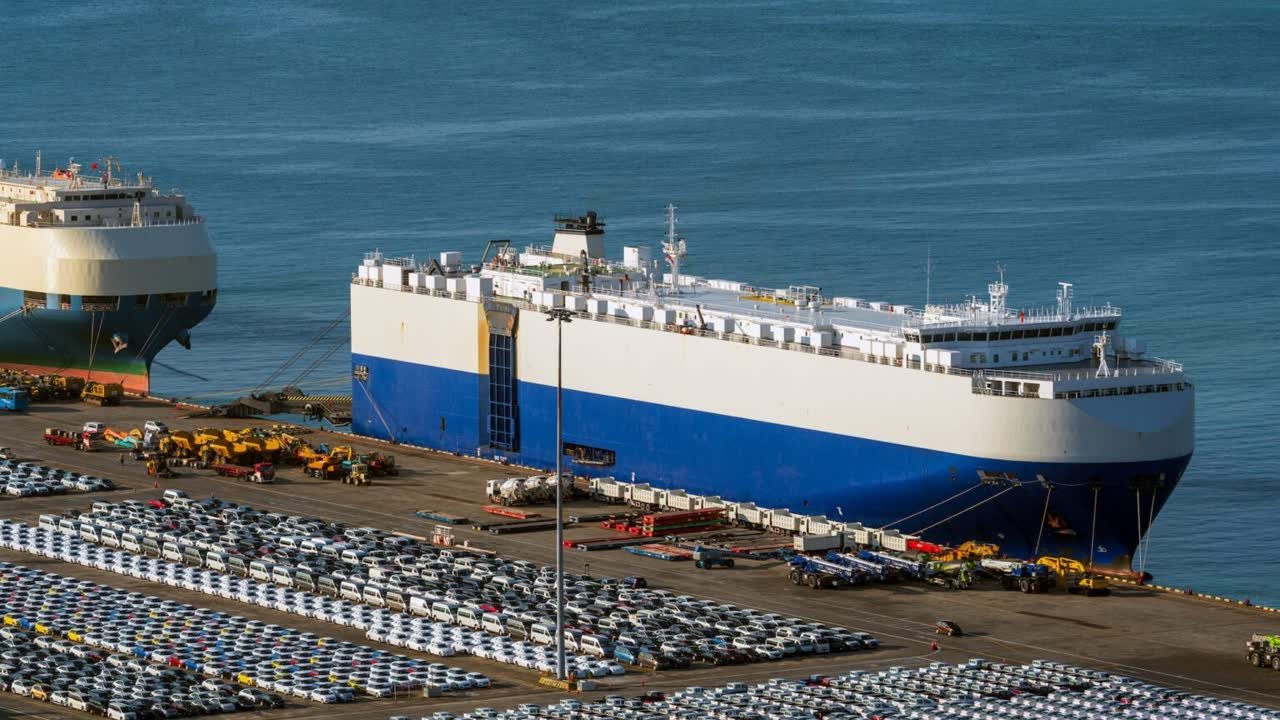
In RoRo shipping, your car is driven onto a specialized vessel, parked on a deck alongside hundreds or thousands of other vehicles, and lashed down for the voyage. RoRo ships are floating parking garages built for exactly this job, with internal ramps connecting deck after deck.
RoRo is the cheapest way to send a car overseas. It is also the fastest at the port, because loading and unloading a roll-on vessel takes hours rather than days. The tradeoff is exposure. Your car shares the journey with hundreds of other vehicles, and you cannot ship personal belongings inside the car.
Most standard sedans, SUVs, and trucks heading to popular destinations go RoRo. For a common route like the US East Coast to Europe, RoRo is typically the default unless you want more protection. See the international car shipping guide for how RoRo fits into the broader process.
Container Shipping
Container shipping puts your car inside a standard 20 or 40 foot steel shipping container, which is then loaded onto a container vessel. A 20 foot container holds one car. A 40 foot container can hold two, making it a sensible option when a household is sending two vehicles to the same port.
The container adds real protection. Your car is sealed inside a steel box, shielded from sea air, spray, and the dings of a crowded vehicle deck. It also lets you ship household goods in the same container, with the car braced and secured alongside your belongings.
The cost is higher, often 30 to 60 percent more than RoRo on the same route, and the timeline can stretch a bit because container sailings run on their own schedules. For high value, classic, or freshly restored vehicles, the upgrade is usually worth it. Luxury car shipping overseas almost always happens in containers, which is the international equivalent of enclosed transport at home.
What It Costs to Ship a Car Overseas
Overseas shipping costs depend on the route, the method, and the vehicle size. For a running sedan sent RoRo from the US East Coast to a major European port, a typical planning range in 2026 is $1,100 to $1,800. That figure covers the ocean freight, not the full door to port cost.
The full door to port price adds inland transport to the departure port, port handling fees, and documentation charges. Those extras can add several hundred dollars, so when you compare shipping costs, make sure you are comparing complete quotes rather than the ocean leg alone.
Longer routes cost more. US to the Middle East or East Asia typically runs $1,800 to $3,000 RoRo for a standard car, and container service to the same ports often lands between $2,500 and $4,500. SUVs and pickups add 15 to 25 percent because they take more deck space.
Season moves prices here too, though less dramatically than on domestic lanes. Booking four to six weeks before your target sail date gives you room to pick a good vessel instead of taking whatever is left.
Transit Times to Popular Destinations
Ocean voyages are measured in weeks, not days. US East Coast to Northern Europe typically takes 10 to 14 days at sea. Add inland transport to the port, a few days for loading, and customs clearance at the far end, and a realistic door to door timeline is three to five weeks.
US to the Middle East or the Arabian Gulf runs about three to five weeks at sea, with total door to door timelines of six to eight weeks. US West Coast to East Asia is roughly two to three weeks at sea. Shipments to Australia and New Zealand take five to seven weeks on the water, with total timelines often reaching two months.
Hawaii is a special case that many shippers misunderstand. It is an ocean voyage, but it works nothing like international shipping. Shipping a car to Hawaii needs no export paperwork or foreign customs, just a domestic carrier that runs the Pacific lane. The cost and timeline sit between a long domestic haul and a short international shipment.
Vessels depart on fixed rotations, often weekly or biweekly, so missing a sailing by a day can mean waiting a full rotation for the next one. Confirm your booking date and the actual departure date in writing.
The Paperwork Behind the Shipment
Customs is where overseas shipping differs most from a domestic move. The US government treats every exported car as an export, with documentation to prove the vehicle is not stolen and is leaving the country legally. Getting this right is not optional, and it is not difficult if you start early.
The core document is the vehicle title. US Customs and Border Protection requires proof of ownership, normally the original certificate of title, and in many cases the paperwork must be presented to CBP at least 72 hours before the vehicle can be exported. Your shipper or freight forwarder usually handles the filing, but the title itself has to come from you. CBP publishes the full rules on its exporting a motor vehicle page, which is worth reading before you sign anything.
Beyond the title, expect to provide a copy of your photo ID and, for some destinations, a bill of sale.
Start the paperwork as soon as you decide to ship. Chasing a replacement title from a state DMV can take weeks, and that is the most common reason sail dates get missed.
The Near Abroad: Mexico and Canada
Not every border crossing is an ocean voyage. Mexico and Canada are the two places where international rules overlap with ground transport, and the distinction matters. A car driven or trucked across either border still counts as an export, with documentation to match.
Mexico has its own system. Vehicles entering Mexico permanently go through a formal import process, while temporary entries use a temporary import permit. Our guide to shipping a car to Mexico walks through the current basics and the paperwork to prepare.
Canada is simpler in practice. Shipping a car from the US to Canada still needs export paperwork on the US side and import processing on the Canadian side, but the rules are stable, written in English, and published by agencies that answer their phones. If this is your first international shipment, Canada is the friendliest introduction.
In both cases, confirm whether your shipper handles the customs brokerage or expects you to arrange it. Budget brokers sometimes sell the transport and leave the border to you.
Choosing an International Shipping Company
The international shipping market has more moving parts than the domestic one, and more places for things to go sideways. The company you hire should be set up specifically for ocean freight, not a domestic broker dabbling in ports. Ask directly how many overseas shipments they handle in a typical month.
A competent forwarder explains the full chain without being asked: inland pickup, port of departure, vessel line, estimated sailing date, port of arrival, customs brokerage, and final delivery. Vague answers about any of those steps are a warning sign.
Verify the company’s credentials the same way you would for any move. The FMCSA’s guidance on choosing a reputable mover applies to the domestic leg, and the same habits transfer. Registered, insured, and willing to put everything in writing.
Price shop, but compare complete quotes that each include inland transport, ocean freight, port fees, and documentation. Enclosed auto transport for the domestic leg to the port is worth considering for high value cars, since that is the one part of the journey where you control the conditions.
Preparing Your Car for the Voyage
Preparation for an ocean shipment is stricter than for a domestic haul. Clean the car inside and out so the condition inspection is accurate. Photograph it thoroughly before handover. Those photos are your evidence if a claim is needed at the far end.
Remove everything that is not bolted down. RoRo lines typically forbid personal items in the car, and customs in some destination countries will hold up a shipment over a trunk full of belongings. Container shipments allow household goods, but they must be declared and listed.
Leave the fuel tank about a quarter full and make sure the car runs and drives under its own power for RoRo. A dead battery at the port is a small problem that causes a large delay.
For high value cars, document the condition with extra care. Enclosed domestic transport to the port plus container ocean freight gives expensive vehicles the most protection available, the same approach used in luxury car shipping on land.
Insurance for the Ocean Leg
International shipments need marine insurance, which is separate from the cargo insurance on a domestic truck. Most forwarders offer it as an add on, priced as a small percentage of the car’s declared value. For a daily driver it is inexpensive. For a six figure car it is essential.
Read the terms before you accept the default. Marine policies vary in what they cover and, more importantly, what they exclude. Pre-existing damage is always excluded, which is another reason the pre-shipment inspection matters. Car shipping insurance follows the same principle everywhere: the paperwork you do before loading determines what you can claim after unloading.
Frequently Asked Questions
How much does it cost to ship a car overseas?
For a running sedan, plan on roughly $1,100 to $1,800 RoRo from the US East Coast to Northern Europe, plus inland transport, port fees, and documentation. Longer routes to Asia or the Middle East typically run $1,800 to $3,000, with container shipping adding 30 to 60 percent.
How long does it take to ship a car overseas?
Door to door, plan on three to five weeks for Europe, four to seven for East Asia, and six to eight or more for the Middle East and Australia. Inland transport, sailing schedules, and customs clearance at both ends make up much of that timeline.
Can I ship personal items in my car?
Generally no with RoRo shipping, which forbids personal belongings in the vehicle. Container shipping does allow household goods, but they must be declared and listed.
What documents do I need to ship a car overseas?
The vehicle title is the core requirement, presented to US Customs, often at least 72 hours before export. You will also need photo ID, and cars with liens need written lienholder permission.
Is RoRo or container shipping better?
RoRo is cheaper and faster for standard vehicles on popular routes. Container shipping costs more but protects the car inside a sealed steel box and lets you include household goods.
Do I need marine insurance?
It is strongly recommended and usually inexpensive for ordinary cars. The forwarder’s basic liability may not cover your car’s full value, and marine policies have specific exclusions.
Can a non-running car be shipped overseas?
Sometimes, but it complicates everything. Many RoRo lines require the car to drive under its own power. Container shipping can handle non runners with a winch, but expect extra handling fees.
Overseas shipping looks intimidating from the outside, but it is a mature industry with a clear process. Pick your method, start the paperwork early, get itemized quotes from companies that do this every day, and the planning you do on land is what makes the voyage uneventful.