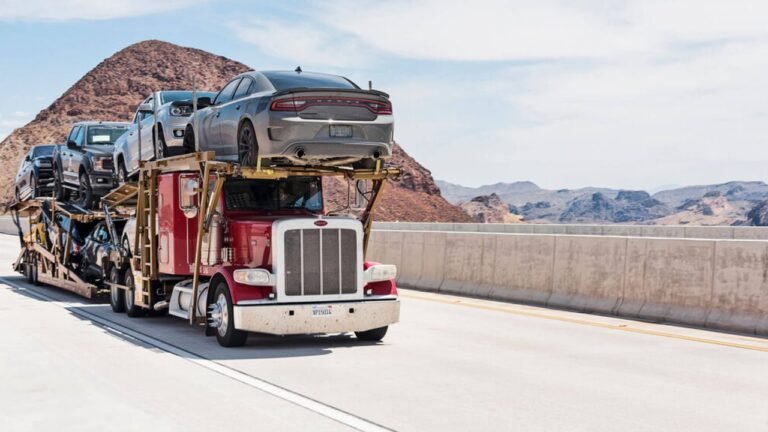

Car Shipping Near Me
Car Shipping Near Me
When you search for car shipping near me, you are usually looking for something simple. You need your car moved from your driveway to somewhere else, and you want a company that actually shows up.
The phrase sounds like a local service, and in some ways it is. But auto transport is a national network of brokers and carriers, so the company that handles your pickup might be based two states away. What matters is not where their office sits. What matters is whether they can get a truck to your address on the dates you need.
This guide explains what “near me” really means in car shipping, how to find reputable companies in your area, what it typically costs, and how to verify a company before you hand over your keys.
What “Car Shipping Near Me” Really Means
Auto transport companies rarely operate only in one city. Most carriers run regional routes, often covering several states, and brokers coordinate shipments nationwide. So your search results will mix local companies, regional carriers, and national brokers that serve your area.
Door to door service is the standard in this industry. The driver picks up your car as close to your address as a full size truck can legally park and delivers it the same way. If you want the full picture of how that process works from booking to delivery, read how auto transport companies work before you start collecting quotes.
Short local moves are priced differently from long distance ones. A 100 mile shipment can cost a few hundred dollars, while the per mile rate on short runs is actually higher than on long runs. The truck still has to schedule your load, drive to you, and load the car, regardless of how far it travels after that.
The main advantage of a nearby company is flexibility. Local carriers can sometimes squeeze your car into an existing route quickly, and pickup windows tend to be shorter. If timing is tight, searching close to home is a sensible first move.
How to Find Car Shipping Services in Your Area
There is no single best method. A mix of search, reviews, and referrals usually surfaces the strongest candidates. Here is how to work through it.
Search With Intent
Start with specific queries instead of just the head term. Try phrases like “auto transport [your city]”, “enclosed car carrier near [your zip code]”, or “car moving company [your metro area]”. More specific searches pull up companies that actually run your route instead of national directories.
Pay attention to which companies show a real local presence: a physical address, local phone number, and reviews that mention your city or region. National lead sites can be useful for quotes, but they are not the same as a company with trucks nearby.
Check Reviews the Right Way
Google reviews and the Better Business Bureau are the two most useful places to look. The BBB also lets you see complaint history and how the company responded, which says more than a star rating alone. You can browse company profiles at bbb.org and filter by your area.
Read the negative reviews first. Every company has them, so look for patterns. Repeated complaints about pickup delays or surprise fees tell you more than ten glowing five star reviews. Our guide to reading car shipping reviews explains how to separate genuine feedback from padded listings.
Ask Around Locally
Car dealerships, body shops, and moving companies deal with auto transport regularly. A local dealership can usually name two or three carriers they use for customer deliveries, and those tend to be reliable operators with a reputation to protect in the community.
Friends, coworkers, or neighbors who have moved recently are another solid source. Personal experience beats an anonymous review, especially when the move was on the same route you need.
Make Sure the Company Is Legitimate
This is the step people skip, and it is the step that matters most. Any company transporting cars for hire across state lines must be registered with the Federal Motor Carrier Safety Administration and hold an active MC number.
Ask the company for its MC number, then verify it yourself. The FMCSA keeps public records of every registered carrier and broker, and our FMCSA MC number lookup guide walks you through exactly where to check and what the results mean.
Also confirm insurance. Carriers are required to carry cargo insurance, and a legitimate company will tell you its coverage limits when asked. If a quote seems unusually cheap, that is often the reason. The FMCSA website publishes the registration and insurance requirements that every interstate carrier must meet.
Brokers and carriers are different things, and both can be legitimate. A broker arranges your shipment with a carrier; a carrier owns the trucks. Understanding that distinction before you sign anything is covered in our car moving companies vs brokers breakdown, and it is worth ten minutes of your time.
What It Typically Costs to Ship Close to Home
For a running sedan moved 100 to 300 miles on an open carrier, typical 2026 prices run $350 to $700. That works out to roughly $1.50 to $3 per mile, much higher per mile than a cross country run, because the fixed costs of scheduling, pickup, and paperwork are the same no matter the distance.
A common benchmark is that short moves under 500 miles land between $400 and $900 for a standard sedan. SUVs and pickups add roughly $75 to $200 because they take more deck space and add weight. Non running vehicles usually add $100 to $200 for the extra loading equipment.
Enclosed transport, which protects the car inside a covered trailer, typically costs 40 to 60 percent more than open transport. For a daily driver on a short hop, most people find open transport perfectly adequate. If you want detailed per mile numbers, see car shipping cost per mile.
Season plays a role even on local routes. Summer moving season and the weeks around major holidays push prices up across the board. If your dates are flexible by even a few days, comparing car shipping quotes across different pickup windows can reveal meaningful savings.
Be wary of quotes that come in far below the rest. A quote at half the going rate is almost never a bargain. It usually means the broker cannot find a carrier at that price, and your car sits unassigned while the pickup date slips.
Watch the video below for a practical walkthrough of how to evaluate an auto transport company before you commit.
Questions Worth Asking Before You Book
Ask whether the quote is binding or an estimate. Many low quotes are estimates that rise once a carrier is actually assigned. A binding quote locks the price, and you should get it in writing either way.
Ask about the pickup window, not an exact date. Drivers run multi stop routes, so companies offer windows of one to three days. Anyone promising an exact pickup time for a standard rate shipment is telling you what you want to hear, not what they can deliver.
Ask how deposits work. Reputable brokers typically charge a deposit at booking and the balance on delivery, often to the driver. Full payment upfront before a carrier is assigned is a warning sign. Our choose a car shipping company guide lists the full set of screening questions in one place.
Ask about cancellation terms. Legitimate companies let you cancel before a carrier is assigned, usually with little or no penalty. Vague or aggressive cancellation policies are a reason to walk away.
The cheapest quote is rarely the best quote. A realistic mid range price from a verified company with solid reviews beats a rock bottom number that never finds a truck.
Mistakes That Cost People Time and Money
Booking based on price alone is the most common mistake. The car shipping market runs on load boards where carriers pick the loads that pay fairly. Underpriced listings simply get ignored, and the customer ends up rebooking at a higher price weeks later.
Waiting until the last minute is the second. While a nearby carrier can sometimes move fast, most people need at least a week of lead time, and two weeks is safer. Last minute bookings go to whoever is available, not whoever is best.
Skipping the pickup inspection is the third. The driver notes your car’s condition on the bill of lading at pickup, and that document is your only evidence if a damage claim comes up later. Walk around the car with the driver and take your own dated photos too.
Before pickup day arrives, it pays to get your vehicle ready the right way. Our how to prepare your car for shipping guide covers cleaning, documentation, fuel levels, and everything else to handle before the driver shows up.
How Far Ahead Should You Book
For a standard local or regional move, booking 7 to 14 days ahead typically gives you the best balance of price and carrier choice. The load has enough time to attract a good driver without sitting so long that the rate softens and gets ignored.
If your dates are completely rigid, book earlier rather than later. Expedited service exists, but it costs a premium, sometimes 25 to 50 percent above the standard rate. Flexibility on the pickup day is the cheapest upgrade you can give yourself.
On the other hand, booking a month out for a short move is usually unnecessary unless it is peak season. Quotes have a shelf life because carrier availability and fuel costs shift, so a very early quote may not hold anyway.
One last note on timing. If you are shipping because of a move, coordinate the car shipment with your moving schedule rather than treating it as an afterthought. Cars often arrive on a different day than your household goods, and planning for that gap keeps things calm. A few days of overlap between your arrival and the car’s delivery is far better than scrambling for a rental at the last minute.
Frequently Asked Questions
Is it cheaper to ship a car a short distance?
The total price is lower, but the per mile rate is higher on short runs. A 200 mile shipment might cost $500, which is $2.50 per mile, while a 2,000 mile shipment might cost $1,200, or 60 cents per mile. Fixed costs like scheduling and loading do not shrink with distance.
How do I know a car shipping company near me is legitimate?
Verify its MC number with the FMCSA, check its insurance coverage, and read reviews on Google and the BBB. A legitimate company gives you its MC number without hesitation and explains its deposit and cancellation terms clearly. Anything secretive is a red flag.
Can I get door to door pickup at my home?
Usually yes, as long as a large truck can safely reach your street. The driver needs room to maneuver and park legally. If your street is too narrow or restricted, you will agree on a nearby meeting point like a parking lot, which is still considered door to door service.
Should I choose a local company or a national broker?
Either can work well. A local carrier may offer faster pickup on routes it runs regularly, while a national broker has access to thousands of carriers and more scheduling flexibility. Judge the specific company on verification and reviews, not on its size.
How fast can a car be shipped locally?
Transit itself is usually 1 to 3 days for moves under 500 miles, since the truck covers that distance quickly. The bigger variable is pickup scheduling, which depends on when a carrier is running your route. Book a week or two ahead for the smoothest timing.