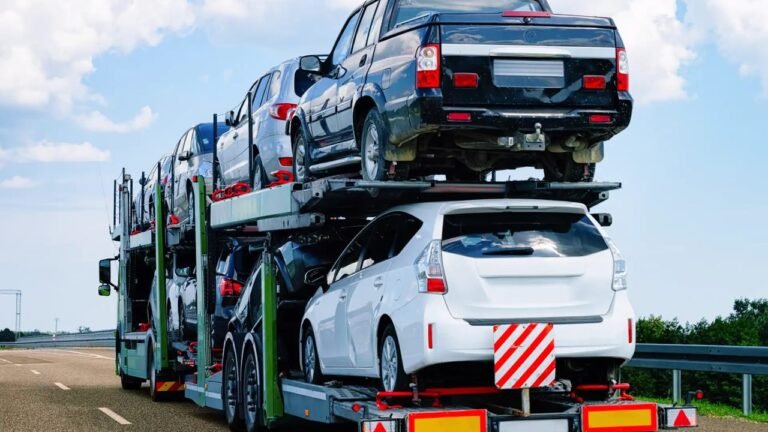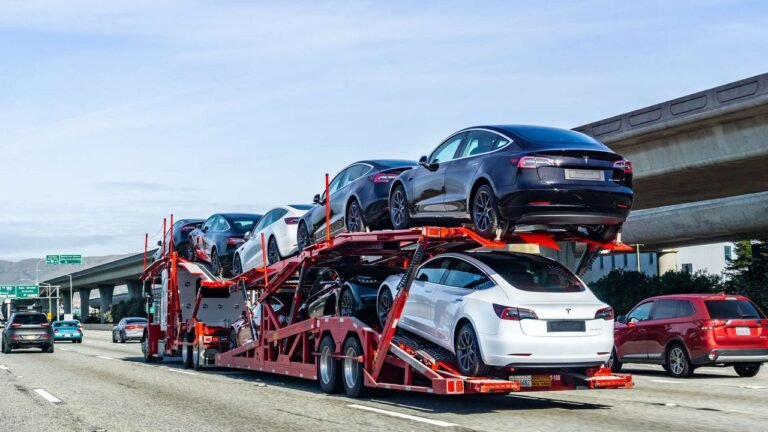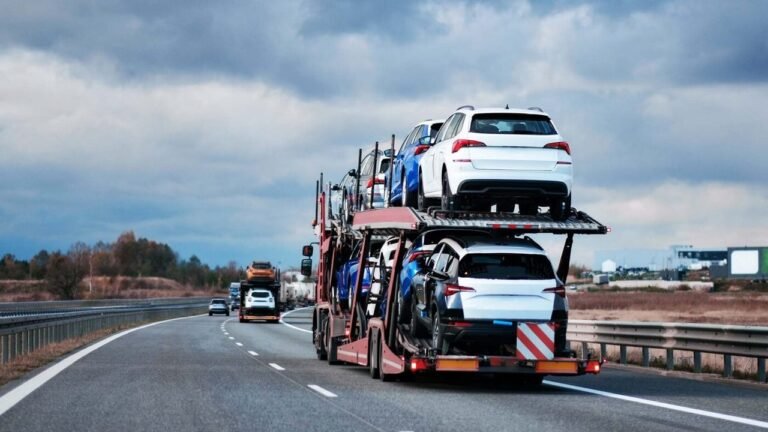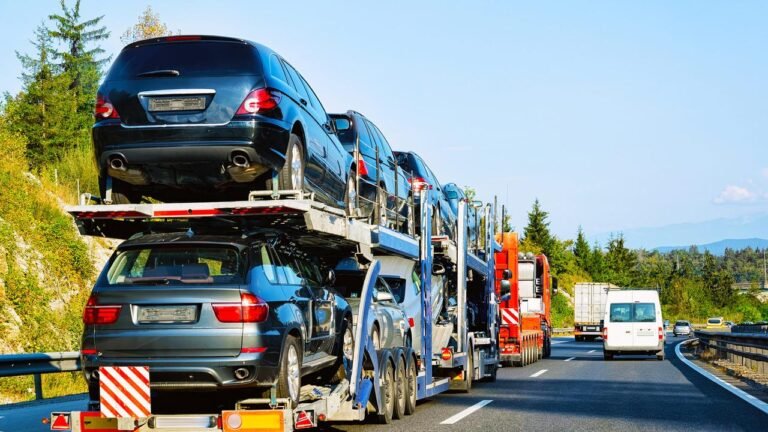
Car Shipping Cost Per Mile
Car shipping cost per mile is the simplest way to sanity check any quote. In 2026, open carrier rates run roughly $1.00 to $1.50 per mile for short trips under 500 miles, dropping to about $0.50 to $0.70 per mile on trips over 2,000 miles.
The key insight is that the per mile rate falls as distance grows. A 300 mile trip at $1.30 per mile costs $390, while a 2,500 mile trip at $0.60 per mile costs $1,500. Longer trip, lower rate per mile, higher total. That pattern holds across the whole industry.
This guide lays out the 2026 per mile bands, explains why they work this way, and shows you how to use per mile math to compare quotes in about sixty seconds.
2026 Per Mile Rates by Distance
Under 500 miles, expect $1.00 to $1.50 per mile. A 250 mile hop at $1.20 per mile comes to $300, though most carriers have minimums around $400 to $500, so very short trips often price above the pure per mile math.
From 500 to 1,000 miles, the band drops to $0.75 to $1.10 per mile. An 800 mile move at $0.90 per mile is $720, which lines up with real quotes for lanes like Atlanta to Dallas.
From 1,000 to 2,000 miles, expect $0.60 to $0.85 per mile. A 1,400 mile trip at $0.70 per mile is $980. This is the most commonly shipped distance band in the country, and the most competitive.
Over 2,000 miles, rates fall to $0.50 to $0.70 per mile. A 2,800 mile coast to coast run at $0.55 per mile is $1,540. These are baseline open carrier rates for a running sedan. SUVs, enclosed trailers, and inoperable vehicles all push the numbers up. Our full cost to ship a car guide has total price examples for popular routes.
One caveat on the short end: carriers enforce minimum charges, usually $400 to $500, no matter what the per mile math says. A 100 mile trip at $1.50 per mile would be $150, but no carrier fires up a truck for that. The minimum is the real price on very short moves.
Why Longer Trips Cost Less Per Mile
Every shipment carries fixed costs that do not depend on distance: dispatching, scheduling, loading your car, unloading it, insurance paperwork, and the driver’s time at both ends. On a 200 mile trip, those fixed costs dominate. On a 2,500 mile trip, they are spread thin.
Think of it like a taxi. The flag drop covers getting the cab to you, and the meter covers the ride. Auto transport works the same way, except the flag drop is several hundred dollars of real labor. That is why short trips look expensive per mile and long trips look cheap.
Carriers also prefer long hauls. A driver would rather run 2,500 miles of steady highway than string together five short hops with five loadings and five customers. Steady demand on long lanes keeps per mile rates competitive there.
The math also explains why adding 500 miles to a long trip barely moves the total. Going from 2,000 to 2,500 miles at $0.60 per mile adds just $300, while going from 200 to 700 miles at $1.20 per mile adds $600. Distance matters less and less the farther you go.
What Pushes Your Per Mile Rate Up or Down
Vehicle size moves the rate more than most people expect. A full size pickup can run 20 to 30 percent higher per mile than a sedan on the same lane, because it takes more trailer space and weight capacity. EVs often price slightly higher too, since battery packs make them heavy. The Department of Energy publishes vehicle weight data that explains why carriers treat them as heavy loads.
Enclosed transport roughly multiplies the per mile rate by 1.4 to 1.6. A lane that prices at $0.70 per mile open will price around $1.00 to $1.10 per mile enclosed. Inoperable vehicles add a flat $100 to $200, which hits the per mile math hardest on short trips.
Route and season matter as well. Rural endpoints, low volume lanes, and peak summer months all push the effective per mile rate toward the top of each band. National average cost figures reflect these swings, so compare your quote against the right season and lane. And when diesel jumps, the bands shift up within days. The EIA’s weekly petroleum reports are where the industry watches it happen.
How to Use Per Mile Math When Comparing Quotes
Divide any quote by the mileage to get its per mile rate, then check it against the bands above. A 1,200 mile quote of $900 is $0.75 per mile, squarely in the band. A quote of $600 for the same trip is $0.50 per mile, below the band and worth a hard look.
This trick exposes bait quotes fast. If three quotes cluster at $0.70 to $0.80 per mile and one sits at $0.45, the outlier is not a bargain. It is a number designed to win your deposit. Running a per mile estimate on a cost calculator first gives you the band before any salesperson calls.
Remember that per mile math is a check, not a price list. Carriers quote total prices based on their actual costs and route needs on your dates. Use the bands to spot outliers, then book the realistic quote from a verified company. You can confirm any company’s operating authority on the FMCSA site before you commit.
It also works in reverse. If a broker tells you the price went up $150 at dispatch, divide the new total by your mileage. If the new per mile rate still sits inside the band for your distance, the increase is probably honest. If it jumps well above the band, push back or walk away.
Special Cases That Break the Bands
Expedited shipping adds 20 to 40 percent, which pushes the per mile rate above its band. If you need a car picked up in 48 hours, you are paying for the carrier to rearrange their route, and the math reflects it.
Alaska and Hawaii do not follow mainland bands at all, since they involve ocean freight or long Canadian transits layered on top of truck transport. Get dedicated quotes for those moves and do not apply per mile math to them.
Multi-car shipments often beat the bands. Two cars to the same destination let the carrier fill slots efficiently, and the per mile rate per car can drop 10 to 15 percent. If you are moving more than one vehicle, always quote them together. Cross country shipping costs follow the over 2,000 mile band most closely.
Frequently Asked Questions
What is a good per mile rate for car shipping?
For a running sedan on an open carrier in 2026, $0.60 to $0.85 per mile on trips over 1,000 miles is solidly normal. Shorter trips run higher per mile, which is expected. Compare your quote’s per mile rate against the band for your distance, not against someone else’s different trip.
Why is my short trip so expensive per mile?
Fixed costs. Loading, dispatch, insurance, and the driver’s time at pickup and delivery cost nearly the same whether the trip is 150 miles or 1,500. Those costs spread over fewer miles on short trips, so the per mile rate looks high even when the total is reasonable.
Do SUVs cost more per mile than sedans?
Yes, typically 15 to 30 percent more per mile on the same lane. Larger vehicles take more deck space and add weight, and carriers price both. Full size trucks and large SUVs sit at the top of that range.
Is enclosed transport worth the higher per mile rate?
For daily drivers, usually not. Open carriers move the vast majority of vehicles safely, including brand new cars headed to dealerships. Enclosed is worth it for classics, exotics, and vehicles where paint condition is financially important.
Can per mile rates predict my exact quote?
They get you close, usually within 10 to 15 percent, but they are not a price list. Season, exact route, timing, and carrier availability on your dates all move the final number. Use per mile math to validate quotes, not to replace them.
Per mile math will not book your car, but it will keep you from booking badly. Sixty seconds of division separates the real quotes from the bait.
Check the band, verify the company, and book the realistic number. That is the whole skill, and now you have it.