
Cheapest Car Shipping Companies
Everyone wants the cheapest car shipping company, and the search results make it look like someone out there will move your car for pocket change. The ads promise the lowest price in the country, and the temptation to click the cheapest quote is strong.
Here is the uncomfortable truth. There is no single cheapest company that stays cheapest on every route, every week, in every season. Prices in auto transport move with fuel, demand, and lane balance, so the cheapest honest quote for your specific trip changes constantly.
The good news is that cheap, legitimate car shipping absolutely exists. It just looks different from what the ads promise. Below is how pricing actually works, what genuinely drives prices down, and how to find the affordable option without getting burned.
Why There Is No Single Cheapest Company
Auto transport is not like buying a television, where one store has the lowest price and everyone knows it. It is a live marketplace where carriers bid on loads posted to national load boards, and prices shift week to week.
Most of the companies you find online are brokers, which means they do not own trucks. A broker’s price is the carrier pay they believe a driver will accept, plus their own fee. Understanding the difference between a broker and a carrier changes how you read every quote.
When demand spikes, carrier pay rises and every broker’s price follows. When a truck has empty spots heading your way, prices drop. No single company controls this market, which is why naming a permanent cheapest winner is meaningless.
For a full explanation of how quotes are built from the ground up, our vehicle shipping guide walks through the pricing mechanics in plain language.
What Actually Makes a Shipment Cheap
Cheap car shipping is not about finding a magic company. It is about stacking the factors that lower any company’s price. Get enough of them on your side and the quotes drop noticeably.
Open Carrier Transport
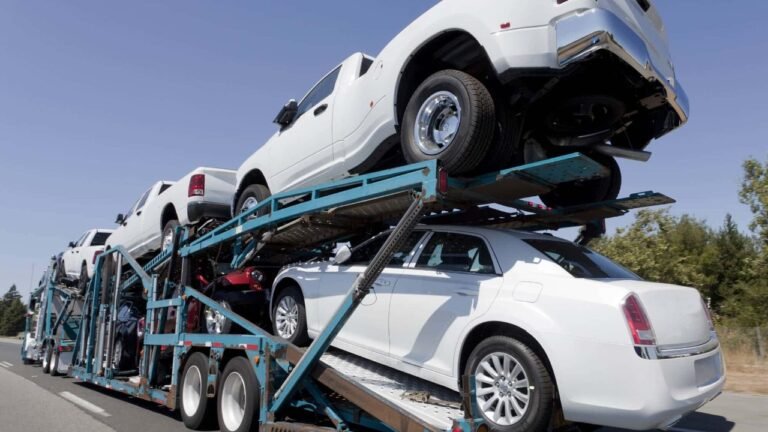
Open carriers move roughly 90 percent of all shipped vehicles. They are the cheapest option because each truck carries 7 to 10 cars at once, spreading fuel, driver pay, and insurance across many customers.
Enclosed transport costs 40 to 60 percent more for the same route, because the trailer carries fewer vehicles and the equipment costs more. Unless your car genuinely needs protection from the elements, open transport is the single biggest way to keep the price down.
Flexible Pickup Dates
Flexibility is worth real money. A pickup window of three to five days lets the broker match your car with a truck already running your lane, which typically saves $50 to $150 compared to demanding one specific day.
Rush and guaranteed dates cost more because they force the broker to buy space on a specific truck. If your schedule allows it, letting the truck come to you on its own rhythm is the budget move.
Popular Routes and Smart Timing
Busy lanes like Los Angeles to Dallas or Florida to New York have constant truck traffic and fierce carrier competition. Prices on these routes run well below the national average per mile, simply because trucks are already going there full.
Season matters too. January through March is usually the cheapest window for most routes, while summer prices run 10 to 20 percent above average. Our cheapest way to ship a car guide covers timing strategy in detail.
Real Discounts Worth Asking About
Many companies offer discounts that never appear on their quote forms. Military members, students, seniors, and first responders commonly get 5 to 10 percent off just by asking and providing proof of status.
Multi-car discounts are real as well. Shipping two vehicles on the same truck often saves $100 to $200 per car, because the carrier fills more spots in a single stop instead of driving to two pickups. Two cars shipping together can also get dispatched faster, since the driver fills the trailer more efficiently.
Some brokers quietly discount repeat customers and snowbird routes, since those customers ship twice a year on predictable schedules. Snowbirds moving between Florida and the Northeast every fall are especially valuable to brokers, because the return leg fills trucks that would otherwise head back empty. It costs nothing to ask, and the discount is applied before you pay anything.
A legitimate discount lowers a fair price, but it never turns an unfair price into a deal. If the quote was absurdly low before the discount, it is still absurdly low after it.
The Lowball Quote Trap
The cheapest looking quote is often the most expensive one you will ever receive. A broker quotes $300 below market to win your deposit, then discovers no carrier will accept the load at that price.
What follows is predictable. Your car sits unassigned for days, the broker calls asking for more money to get the truck moving, and your pickup date slips. By the time it is over, you have paid more than the honest quote would have cost.
Industry data consistently shows that quotes far below the market cluster generate the most consumer complaints in auto transport. The FTC consumer site explains how bait and switch pricing works across industries, and car shipping is full of it.
Learn exactly what a car shipping broker does and how brokers earn their fee, and lowball quotes become easy to spot in seconds.
How to Compare Prices Without Getting Played
Get three to five quotes with identical details. Same pickup and delivery ZIP codes, same vehicle year make and model, same dates, same transport type. Throw out the highest and the lowest, and the middle cluster is your true market price.
Ask each broker what the carrier is actually being paid. Honest companies answer directly. Evasive ones are hiding either a fat margin or carrier pay so low that no driver will accept your load.
Edmunds publishes car buying and transport cost research that helps set realistic expectations, but the live quotes you collect are always the final word for your specific route.
See our cheap car shipping tips for more legitimate ways to shave the number down before you book.
Terminal to Terminal vs Door to Door
Terminal to terminal service, where you drop your car at a storage lot and pick it up at another, is sometimes advertised as the cheapest option. It can save $50 to $100, but the savings come with real tradeoffs.
You have to get yourself to and from the terminals, your car may sit in an open lot for days, and storage fees can eat the savings if pickup is delayed. Terminal storage typically runs $15 to $35 per day, so a two day delay can erase the advertised savings entirely. For most customers, door to door service at a fair market price is the better value once the hidden costs are counted.
Ways to Lower the Quote Without Risking Your Car
Start with the car itself. A clean, empty, running vehicle loads faster and avoids the extra fees that show up when a car surprises the driver.
Inoperable vehicles typically add $100 to $200 for winch time and extra handling, so an honest “running” description keeps the quote honest too. If the car does not start, say so upfront rather than letting the driver discover it on pickup day.
Remove roof racks, bike carriers, and loose accessories before pickup. They add height and weight that can push a vehicle into oversize pricing, and they are not covered by cargo insurance if they get damaged.
Keep the fuel tank around a quarter full. A full tank adds roughly 100 pounds of weight, and across 8 cars on a trailer that weight turns into real fuel the carrier has to burn.
Offer to meet the driver at an easy meeting point. A truck stop or large parking lot near a highway lets the driver load without detouring into tight residential streets, and drivers reward that flexibility with smoother scheduling.
Distance math matters as well. Our car shipping cost per mile guide shows how per mile rates fall on longer routes, which is why timing a long trip well can lower the effective price of every mile.
Compare the numbers honestly after making these moves, and read our guide to comparing quotes before you commit. One tactic alone rarely moves the price much, but stacked together they can shave $100 to $300 off a typical shipment without touching safety.
Finally, read the contract before you pay. Legitimate discounts and fair terms look the same on a quote, but only the contract shows cancellation rules, binding price language, and who handles damage claims. Five minutes of reading can save five hundred dollars of regret.
Frequently Asked Questions
What is a realistic cheap price to ship a car?
For a running sedan on an open carrier, typical market prices run $450 to $750 for short regional trips and $1,300 to $1,800 for coast to coast moves. Anything dramatically below these ranges for the same route is likely a lowball estimate rather than a real price.
Why do prices differ so much between companies?
Most companies are brokers estimating what carrier pay will get your car onto a truck. They estimate differently, pad their fees differently, and some deliberately lowball to win deposits. The underlying carrier market is the same for everyone, which is why the middle of several quotes tells the truth.
Is open carrier transport safe for my car?
Yes. About 90 percent of all shipped vehicles travel on open carriers, including brand new cars delivered to dealerships every day. Federal cargo insurance covers the vehicle during transit, and damage claims are rare relative to the volume of cars moved.
How far ahead should I book to get the best price?
Two to three weeks is the sweet spot. The dispatcher has enough time to match your car with a truck already running your lane, which is when the best prices happen. Last minute bookings under a week almost always cost more.
Do discounts like military or student pricing actually work?
Yes, many companies offer 5 to 10 percent off for military members, students, seniors, and first responders. You usually have to ask and provide proof, since the discount rarely appears automatically on quote forms. It is a real saving on top of an already fair price.
Can I negotiate a car shipping quote?
Yes, within limits. The carrier pay follows the market, so there is little room there, but the broker fee and dispatch flexibility can move the number. Offering a wider pickup window or an off peak date gives the broker real leverage to lower the total. Ask what trade would bring the quote down, get the final number in writing, and an honest broker will answer.
Why did my quote change from last month?
Because the market moved. Carrier rates shift week to week with fuel prices, seasonal demand, and how many trucks are running your lane. A quote is a snapshot of the live market, not a price lock, so ask how long each company honors its number.
Does vehicle size really change the price that much?
Yes. A full size SUV or pickup takes more trailer space and weight than a sedan, so it typically costs $75 to $200 more on the same route. Lifted, modified, or oversized vehicles cost more still, because they limit how many cars the carrier can fit on the load.
The cheapest car shipping company is not a name. It is a combination of open transport, flexible dates, off season timing, and an honest broker quoting the real market price.
Collect your quotes, throw out the outlier on the bottom as well as the top, and pick the company that explains its price clearly. That is how you pay less without paying twice.