

Car Moving Companies vs Brokers
The terms get thrown around like everyone knows what they mean. Car moving company, auto transport broker, carrier, shipper. In practice, most customers use the wrong word for the company they hired.
The distinction matters because it determines who actually touches your car, who is responsible when something goes wrong, and where your money goes. A broker and a carrier sell you the same outcome through very different machinery.
This guide explains both sides plainly: what each one does, how they make money, and how to decide which type fits your shipment.
What a Carrier Actually Is
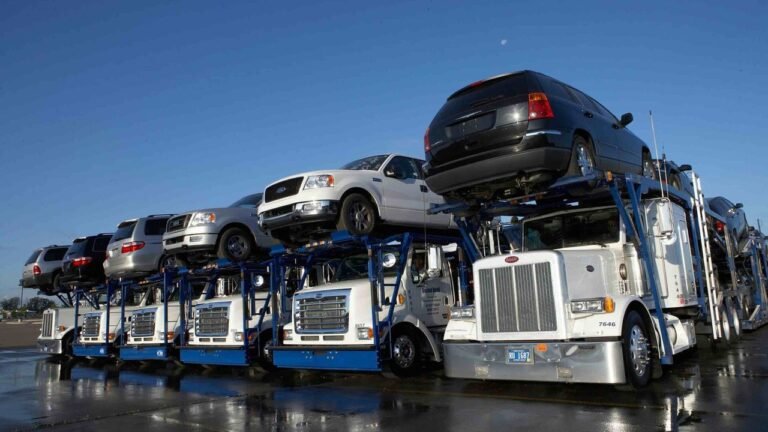
A carrier owns trucks and employs drivers. When you book directly with a carrier, the company you pay is the company whose trailer your car rides on.
Carriers range from single truck owner operators to fleets with dozens of rigs. Most specialize in specific lanes or regions because a truck can only be in one place at a time.
The advantage of a carrier is simplicity. One company, one chain of responsibility, and the driver works for the people you paid. If something goes wrong, there is no middleman to point at.
The limitation is coverage. A carrier that runs Texas to Florida weekly cannot help you ship from Seattle to Boston. Their trucks go where their trucks go.
What a Broker Actually Does
A broker does not own trucks. A broker takes your order, posts it on national load boards where carriers look for freight, and matches your car with an available carrier.
The broker also coordinates the details: pickup windows, driver contact, paperwork, and a single point of contact if problems arise. Good brokers vet the carriers they use for insurance and safety records.
Brokers make money on the spread between what you pay and what the carrier accepts. A typical broker fee runs $100 to $250 per vehicle, though it is rarely itemized on your quote.
The advantage of a broker is reach. One phone call gives you access to thousands of carriers across every lane in the country, which matters most on uncommon routes.
That reach also matters when your timing is tight. A broker can post your load to the whole market at once instead of waiting for one company’s truck to line up with your dates. On a route with few direct carriers, this is often the difference between shipping this week and shipping next month.
The risk is quality variance. Your experience depends heavily on which carrier the broker assigns, so the broker’s vetting standards matter more than their marketing.
How the Money Flows
With a carrier, the path is short: you pay the carrier, the carrier pays its driver and covers its costs. The price you see is close to the price of the actual transport.
With a broker, your payment splits three ways. Part goes to the carrier as the transport fee, part stays with the broker as the coordination fee, and part covers insurance and overhead.
The carrier’s share has to be high enough to attract a driver, and that is the number to watch. If the total price looks fair but the carrier pay is thin, your load will sit on the board while better paying freight moves first. Ask for the split before you book, not after your car fails to move.
This split is where most pricing games happen. Some brokers quote you a low total while offering carriers too little, which means no driver accepts your load until you pay more.
Ask any broker what the carrier pay is on your load. Honest brokers answer directly, because they know the carrier has to accept the price for your car to move. Evasive brokers are hiding something.
For the full breakdown of what each dollar pays for, see our auto transport cost explainer.
Who Is Responsible When Things Go Wrong
With a carrier, responsibility is clear. The company that moved your car handles damage claims under its cargo insurance, and there is no one else to blame.
With a broker, it gets murkier. The carrier’s insurance still covers damage to your car, but the broker arranged the carrier. A good broker helps you through the claims process, while a bad one tells you it is between you and the carrier.
This is why the broker’s contract terms matter so much. Read what the broker promises to do if the carrier damages your car, misses the window, or disappears. Vague terms here are a red flag.
Federal rules require both brokers and carriers to hold proper authority, which you can verify on the FMCSA site. Licensing does not prevent problems, but it gives you somewhere to complain when they happen.
Vehicle safety standards on the road are overseen by NHTSA, which is worth knowing if you ever need to report an unsafe carrier.
Broker vs Carrier: Side by Side
On price, carriers can be cheaper on lanes they run regularly because there is no middleman margin. Brokers can be cheaper on odd routes because they can shop your load across many carriers.
On availability, brokers win. A broker can usually find a truck within days on any major lane. A single carrier either has a truck going your way or it does not.
On accountability, carriers win. One company owns the whole job. With a broker, you need to trust both the broker’s vetting and the unknown carrier’s execution.
On communication, it depends on the company, not the model. Good brokers communicate better than bad carriers and vice versa. Judge the specific company, not the category.
The model matters less than the operator. An honest broker beats a sloppy carrier, and a careful carrier beats a shady broker, every time.
Our dedicated broker vs carrier breakdown goes deeper into the tradeoffs with real world examples.
Which One Should You Choose
Choose a carrier when your route matches their lane. If you are shipping a common route and find a carrier that runs it weekly, you get simplicity and often a better price.
Choose a broker when your route is uncommon, your timing is tight, or you want one point of contact managing the search. Most first time shippers end up with brokers for exactly these reasons.
Either way, verify before you book. Check the MC number, read reviews critically, and get the key terms in writing. The vetting process is the same for both models.
If budget is the deciding factor, our cheapest way to ship a car guide shows how to save money regardless of which model you pick.
The Hybrids: Companies That Do Both
Some larger companies hold both broker and carrier authority. They run their own trucks on certain lanes and broker out the shipments their trucks cannot cover. This hybrid model is common among the bigger names in the industry.
Hybrids can offer the best of both worlds: direct control where they have trucks and broad coverage everywhere else. But they can also blur accountability, since you may not know which role they played on your shipment until something goes wrong.
The fix is the same direct question: are you acting as the broker or the carrier on my move? Get the answer in writing, along with the carrier’s details if they are brokering your load to someone else.
Do not assume a big brand name means your car rides their truck. In many cases it rides a partner carrier’s truck, which is fine as long as you know it upfront and the partner is properly vetted.
Which One Fits Your Situation
General rules only go so far. Your specific shipment has details that push toward one model or the other, so here is how common situations usually break down.
Shipping a standard car on a popular route with flexible dates fits either model well. Get quotes from both a broker and a carrier on that lane and let price and communication decide. This is the easiest scenario to shop.
Moving a classic, exotic, or luxury vehicle leans toward a specialist. That might be a carrier known for enclosed transport or a broker with deep experience booking enclosed loads. Ask how many enclosed shipments they handle monthly, since occasional enclosed work is not the same as expertise.
Facing a tight deadline usually favors a broker. A broker can post your load widely and raise carrier pay to attract a driver fast, while a single carrier either has a truck available or does not. Just know that real speed costs more, since it disrupts a driver’s planned route.
Shipping to or from a rural address also favors a broker’s reach, because fewer carriers run those lanes. An inoperable vehicle needs a carrier with a winch, which a good broker can specifically search for. For either situation, confirm the capability before you book, not after.
Moving several cars at once, like a family relocation, can go either way. A carrier with an empty trailer might offer a strong multi car price on its lane, while a broker can split the cars across carriers if timing matters more. Get both kinds of quotes and compare.
Frequently Asked Questions
Is a broker just a middleman taking a cut?
A broker does take a fee, typically $100 to $250, but it is not just a cut. Good brokers search hundreds of carriers, vet insurance and safety records, coordinate timing, and give you one accountable contact. Whether that is worth the fee depends on the broker’s quality.
Can I book directly with the truck driver?
Sometimes, but it is not the norm. Most carriers work through brokers and load boards rather than taking retail customers directly. Owner operators on your exact lane may take direct bookings, and load board access is generally limited to industry participants.
Who pays if my car is damaged?
The carrier’s cargo insurance covers damage during transport, whether you booked through a broker or directly. The broker’s role is supposed to be helping you through the claims process. Always document the car’s condition with the driver at pickup and delivery.
Do brokers own any trucks at all?
Some larger companies operate as both broker and carrier, running their own trucks on certain lanes while brokering the rest. Ask directly which role they are playing on your specific shipment, because the answer affects who is responsible.
How do I know which one I am talking to?
Ask outright: are you a broker or a carrier on my route? Then verify the answer against their FMCSA record, which shows whether they hold broker authority, carrier authority, or both. Honest companies answer in the first minute.
Is booking directly with a carrier always cheaper?
Not always. On a lane the carrier runs regularly, cutting out the broker margin can save you money, but carriers only run their own lanes. On routes outside those lanes, a broker shopping many carriers can actually find a lower price, so compare both before assuming.
Can a broker get my car moved faster than a carrier?
Sometimes. A broker can post your load to many carriers at once and offer higher carrier pay to attract a driver quickly. But speed costs money in either model, and no broker can conjure a truck that does not exist on your lane, so be skeptical of anyone promising rush service at standard prices.
I do not know my exact moving date yet. Should I still contact companies?
Yes, for research, but do not book or pay a deposit until your dates firm up. Get quotes, check licenses, and read reviews now, then book once you have a real pickup window. Most companies only need a few days to a week to find a carrier on common lanes.
Brokers and carriers are two ways to buy the same outcome: your car moved safely from one place to another. The machinery differs, but the checks do not.
Verify the license, read the reviews, understand the money flow from our how auto transport companies work guide, and learn the full process in how car shipping works. Do that and the label on the company matters far less than the quality behind it.





2 Comments