
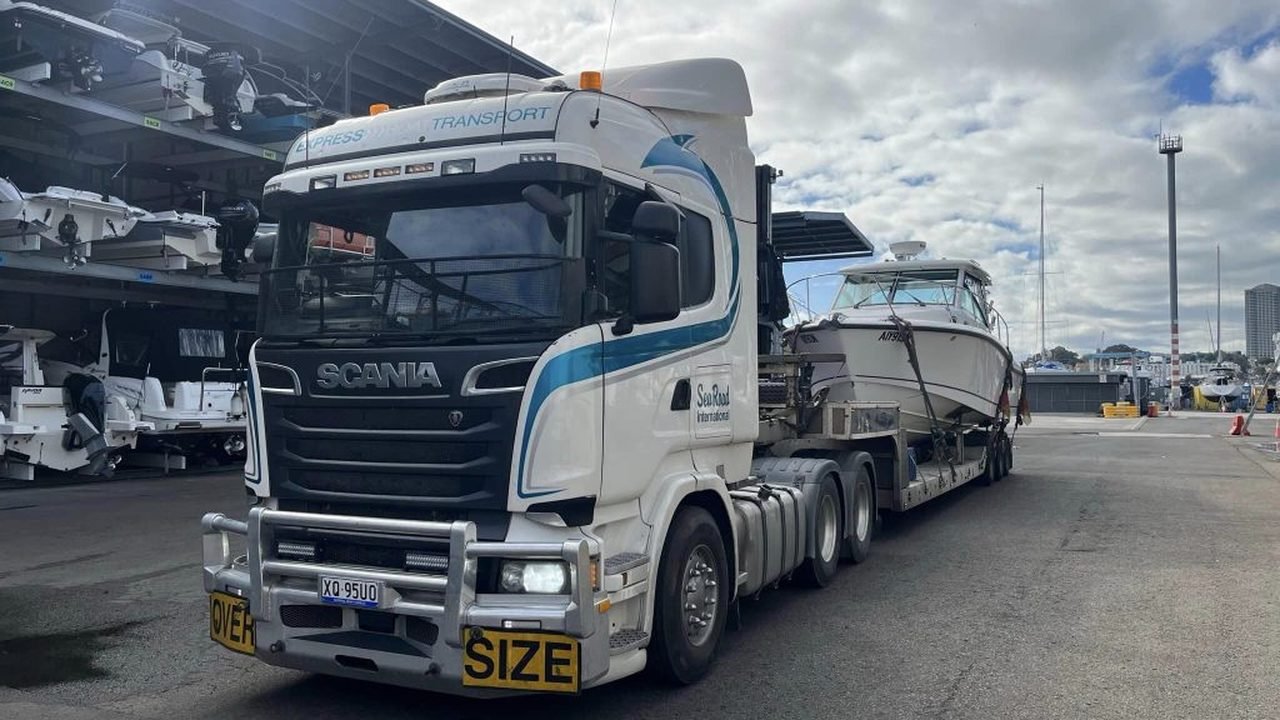
Boat Shipping Costs
Boats do not ship like cars. They are wider, taller, often heavier than they look, and the trailer has to fit the hull, not just the weight. Boat transport is its own specialty with its own pricing logic.
Whether you bought a boat across the country, are moving to the coast, or need seasonal transport, this guide covers what boat shipping costs, how boats are moved, and how to prepare yours.
What Boat Shipping Costs
Boat shipping typically costs $1.00 to $2.50 per mile for standard trailerable boats, with most 1,000-mile moves landing between $1,200 and $2,500. Boats under 25 feet on their own trailers sit at the low end of that range; anything needing a hydraulic trailer starts higher. Larger boats cost significantly more.
Size is everything in boat pricing. A 20-foot bowrider on its own trailer is a straightforward tow. A 35-foot boat with a 12-foot beam needs permits, escorts, and specialized equipment, and the price reflects it.
Oversize boats, generally those over 8.5 feet wide or 13.5 feet tall on the trailer, trigger permit requirements in most states. Permits, route surveys, and escort vehicles can add hundreds or thousands to the total.
How Boats Are Transported
Trailerable boats usually ship on their own trailers, towed by the transport company’s truck. This is the simplest and cheapest option: the boat is already on wheels designed for it.
Boats without trailers, or too large for standard trailers, ship on hydraulic boat trailers or flatbeds with custom cradles. Specialty cargo like motorcycles needs the same kind of purpose-built equipment, as our motorcycle shipping costs guide explains. The transport company builds or adjusts supports to fit your hull, which is skilled work.
Very large boats move as oversize loads with permits and sometimes escort vehicles. These shipments are planned like small construction moves, with surveyed routes avoiding low bridges and tight turns.
Factors That Affect the Price
Beam width is the biggest cost driver after distance. Every inch over the legal limit adds permits and complexity. Measure your boat’s widest point accurately when getting quotes.
Height matters too. Boats on trailers must clear bridges, and anything over 13.5 feet total height needs route planning. Radar arches, towers, and antennas add height; some can be lowered or removed.
Weight affects the truck and trailer required. Most boat transport trucks handle up to 20,000 pounds or so, but heavier boats need bigger rigs. Know your boat’s dry weight plus fuel and gear.
Distance and route follow the usual pattern. Popular boating corridors have regular traffic and better prices. Remote lakes and unusual routes cost more. Season matters: spring commissioning and fall haul-out are the busy times.
Preparing Your Boat for Transport
Remove or secure everything loose. Canvas, cushions, electronics, fishing gear, and anything that could blow off or shift should come off the boat or be firmly secured below deck.
Drain water from the hull, livewells, and ballast tanks. Water is heavy, and a boat full of water is a boat overweight for its quote. Leave fuel at about a quarter tank or less.
Disconnect the batteries and secure them. Turn off all electronics and propane. If the boat has a tower or arch that can be lowered, lower it to reduce height.
Measure Everything
Get accurate measurements: overall length including the trailer and any overhang, beam at the widest point, height from the ground to the highest fixed point, and total weight. Guessing wrong on any of these causes problems on shipping day.
Photograph the boat thoroughly, including the hull, topsides, and any existing marks. The condition report works the same as car shipping: documented at pickup, verified at delivery.
Shrink Wrapping: Worth It for Transport?
Shrink wrap is the tight plastic skin you see on boats in winter storage, and some owners wrap boats for transport too. It protects the hull and topsides from road grime, salt spray, and UV during a long haul. For light-colored gelcoat and boats with polished brightwork, that protection is meaningful.
Professional wrapping for transport typically costs $8 to $15 per foot of boat length, so a 25-foot boat runs $200 to $375. That is cheap insurance against a detailing bill at delivery, but it is not required; thousands of boats ship unwrapped every year without issue.
If you wrap, ventilation matters. A fully sealed boat traps moisture, so a proper wrap includes vents. Support the wrap so it does not chafe the hull at speed, and make sure access points for tie-downs and lifting straps stay reachable.
Tell the transport company in advance if the boat will be wrapped. Drivers need to know what they can and cannot cut or peel during loading, and the condition inspection has to account for what the wrap hides. Some companies prefer to inspect unwrapped and wrap after, which is worth discussing.
For short hauls in fair weather, skip the wrap and spend the money on a good wash at delivery. For cross-country winter moves or boats with fresh paint, wrap it. The decision is about the value of the finish you are protecting.
Choosing a Boat Transport Company
Use a company that specializes in boats. Hull support, height clearances, and oversize permits are not things you want a generalist learning on your boat. Ask how many boats they move per month and what sizes.
Verify their authority and insurance on the FMCSA site, and check complaint records with the Better Business Bureau and the FTC. Boat carriers need the same operating authority as other transporters, plus adequate cargo coverage for the boat’s value.
Ask about their cradle and support system for boats without trailers. The answer should be specific: adjustable bunks, hull pads, proper weight distribution. Vague answers about “we’ll figure it out” are a red flag.
Check reviews from other boat owners. Boating forums and marina bulletin boards have the real stories. A company trusted by a local yacht club has passed the hardest test.
Permits and Oversize Loads
Boats over 8.5 feet wide need oversize permits in most states, and requirements vary by state. The transport company should handle all permitting as part of the service; it is not your job to call fifty state DOTs.
Very wide or tall boats may need escort vehicles, which the company arranges. Escort costs are real and show up in your quote. If a quote for an obviously oversize boat seems too cheap, ask whether permits and escorts are included.
Travel restrictions apply to oversize loads in many states: no night travel, no holiday travel, sometimes no weekend travel. These restrictions extend delivery windows, so plan accordingly.
Boat Transport Insurance
The carrier’s cargo policy covers the boat, but confirm the limit matches the boat’s value. Boats get expensive fast, and a $100,000 cargo policy does not fully cover a $250,000 boat.
Your boat insurance may cover transit. Call your marine insurer and ask. Many boat policies include transport coverage or offer it as an endorsement, which can fill gaps in the carrier’s policy.
Document the boat’s condition meticulously. Hull damage claims live and die on before-and-after evidence. Our shipping insurance guide explains the claims process, which works the same for boats.
Seasonal Boat Transport
Spring and fall are peak boat transport seasons. Spring moves boats to the water; fall hauls them out. Book several weeks ahead during these windows, and expect higher prices. If the boat move is part of a bigger relocation, our step-by-step car shipping guide helps you coordinate the car too.
Winter transport from northern states to warmer climates follows the snowbird pattern. Summer is relatively quiet for boat transport in most regions, which can mean better prices and faster scheduling.
If your dates are flexible, the shoulder weeks just before and after peak season offer the best combination of availability and price. A week of flexibility can save real money.
Saving Money on Boat Shipping
Accurate measurements get you accurate quotes. Wrong dimensions lead to requotes, and requotes never come in lower. Measure twice, quote once.
Reduce height and width where possible. Lowering a tower, removing a windshield, or taking off rod holders can drop you under a permit threshold, which saves more than the hassle costs. Dropping from 9 feet of beam to 8.5 feet can eliminate escort requirements in some states, and that is where the real savings appear.
Be flexible on timing. A pickup window of a week or more lets the company fit your boat into an efficient route. Rigid dates on oversize loads are expensive.
Consider marinas as pickup and delivery points. And like any vehicle shipment, compare against current car shipping costs to sanity-check the transport portion of the quote. They have the equipment to launch and haul, easy truck access, and staff who handle this routinely. Residential pickups for large boats add complexity and cost.
Towing It Yourself vs Hiring Transport
For small trailerable boats and short distances, towing it yourself is often the cheapest option if you have a capable tow vehicle. A few hundred miles with your own truck costs fuel and a day, nothing more.
The math changes with distance and boat size. A 1,500-mile tow means fuel, wear on your truck and trailer, possibly a hotel night, and two days of your time. Professional transport starts looking reasonable, especially if your trailer needs work before a long haul.
At 10 miles per gallon while towing, a 1,500-mile trip burns about 150 gallons of fuel, which alone can cost $500 or more before food and lodging.
Be honest about your trailer’s condition. Bearings, tires, and brakes that are fine for local ramps may not survive a cross-country run. A breakdown halfway with a boat behind you is the most expensive option of all.
Frequently Asked Questions
How much does it cost to ship a boat?
Standard trailerable boats typically cost $1.00 to $2.50 per mile, with 1,000-mile moves landing between $1,200 and $2,500. Oversize boats needing permits and escorts cost significantly more.
Can my boat ship on its own trailer?
Yes, and it is usually the cheapest option. The transport company tows your boat on its trailer. Make sure the trailer is roadworthy: tires, bearings, lights, and brakes all need to be in good shape.
What if my boat is too wide for the road?
Boats over 8.5 feet wide need oversize permits, which the transport company arranges. Very wide boats may need escort vehicles and face travel restrictions. These costs are part of the quote for oversize shipments.
How do I prepare my boat for transport?
Remove loose items, drain water, reduce fuel, disconnect batteries, lower towers if possible, and photograph everything. Get accurate measurements of length, beam, height, and weight before getting quotes.
Is my boat insured during transport?
The carrier’s cargo policy covers it, but verify the limit matches your boat’s value. Check whether your own boat insurance covers transit as well. Document the boat’s condition thoroughly at pickup.
How long does boat shipping take?
Standard boats move on timelines similar to car transport: a few days regionally, one to two weeks cross-country. Oversize loads take longer because of permit restrictions on travel times.
Should I shrink wrap my boat for transport?
It helps for long hauls and winter routes, protecting the finish from road grime and salt spray at roughly $8 to $15 per foot. It is not required, and short fair-weather trips do fine without it. If you wrap, insist on ventilation and tell the driver before loading.
Do I need to empty the fuel tank completely?
No, a quarter tank or less is the standard. Full tanks add serious weight and some carriers will refuse an overweight boat. Drain all water from the hull, livewells, and ballast tanks completely; water weight is the silent budget killer.
Can the transporter launch my boat at delivery?
Many boat haulers offer launch and haul-out at marinas for an additional fee, usually $100 to $300. Arrange it in advance and confirm the destination marina allows commercial launches. Residential deliveries cannot be launched, so plan the final leg to water separately.
Boat shipping rewards specialization: a boat-experienced carrier, accurate measurements, thorough preparation, and verified insurance. Get those right and your boat arrives ready for the water.