

PCS Car Shipping Explained
PCS orders change everything about a move, including what happens to your car. The military has its own system for shipping privately owned vehicles, and it works nothing like booking a commercial carrier.
PCS stands for Permanent Change of Station. When service members relocate under orders, the government may ship one vehicle at its expense, with strict rules about which moves qualify and how the process runs.
This guide explains PCS car shipping in plain language: the entitlement, the process, the costs, and the mistakes to avoid.
What PCS and POV Mean
PCS is a Permanent Change of Station, a reassignment to a new duty station. POV means Privately Owned Vehicle, which is military shorthand for your personal car.
Put them together and PCS car shipping means moving your personal vehicle as part of an ordered military relocation. It covers both moves within the US and moves overseas.
The key point: this is a government benefit with government rules, not a commercial transaction. Your transportation office, not a broker’s sales rep, is the authority on what you rate.
The One Vehicle Entitlement
For most qualifying PCS moves, the government ships one POV at its expense. This mainly applies to moves outside the continental US, to places like Hawaii, Alaska, Guam, Germany, Japan, and Korea.
The entitlement covers shipment from the old duty station to the new one, or to a designated storage location if shipment is not authorized. Storage is the fallback when the gaining location cannot receive vehicles.
A second vehicle is generally your own expense. Some families ship it commercially and pay out of pocket, which is where standard car shipping comes back into the picture.
Entitlements vary by branch, rank, and orders type. The Military OneSource site is the official starting point for current PCS travel and transportation benefits.
CONUS Moves: Usually You Drive
For moves within the continental US, the military generally expects you to drive. You receive mileage reimbursement and per diem for the authorized travel days instead of a shipped car.
Shipping a POV commercially during a CONUS PCS is allowed, but it is typically not reimbursed. Run the math before you book, because the out of pocket cost can exceed the mileage payment.
Exceptions exist for medical or hardship situations, and they require approval through your chain of command and transportation office. Do not assume you qualify without written authorization.
OCONUS Moves: How POV Shipping Works
For overseas and non continental moves, you turn the vehicle in at a designated Vehicle Processing Center, or VPC. The contractor there inspects the car with you and documents its condition. VPC appointments book two to four weeks out during PCS season, so schedule the moment your orders are firm. Arrive with the car already clean and empty, because inspectors reject dirty vehicles and a rejection can cost you your sailing slot.
The car must be clean inside and out, with no personal items, and the fuel tank nearly empty. Inspectors reject dirty vehicles, and a rejection can cost you your sailing slot.
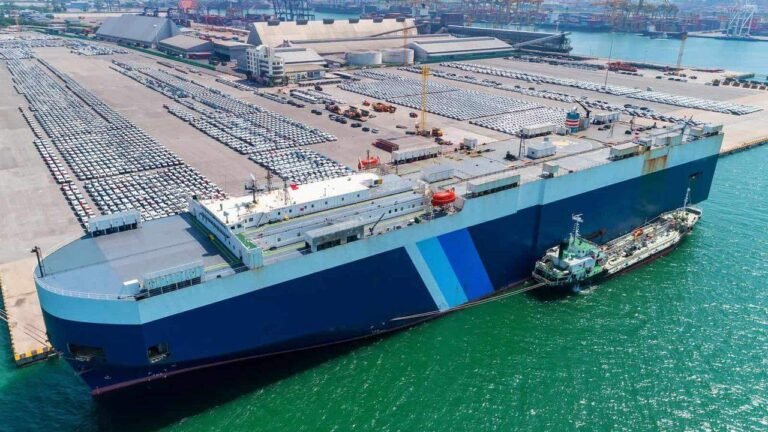
Your car then moves by truck to the port and by ship to the destination VPC, where you pick it up after a joint inspection. Hawaii is one of the most common POV destinations, and our Hawaii car shipping guide covers the commercial side of that route.
For moves beyond US territory, the rules layer with the destination country’s import laws. See our international car shipping guide for how that process differs, and our companion military car shipping guide for the broader topic.
Second Vehicles, Motorcycles, and Exceptions
Motorcycles ship too, usually crated, and they count under the same general POV rules with their own size limits. Crating is handled at the VPC, and you cannot roll the bike in with luggage strapped on. Oversized or modified bikes can trigger the same excess cost charges as oversized cars.
Leased vehicles need written permission from the lienholder before the government will ship them. Start that conversation early, because lenders can be slow.
If you decide to ship a second car commercially, the normal rules apply: open versus enclosed, quotes, and insurance. Our open vs enclosed comparison helps with that call. Book through a licensed company you verify on the FMCSA website.
What It Costs You Out of Pocket
The government’s shipment itself costs you nothing when it is authorized. Your costs are the incidentals: getting the car to the VPC, cleaning and prep, and any excess charges for oversized vehicles. Driving to a distant VPC can mean a full day on the road plus a hotel night, and you still need a ride home after turn in. Cleaning runs $100 to $200 for a professional detail, or a thorough afternoon with a vacuum and a hose if you do it yourself.
Commercial shipment of a second vehicle runs standard market rates. A cross country run typically costs $1,300 to $1,900 for a sedan on an open carrier.
Claims work differently under the government contract. Damage is handled through the claims process at the destination VPC, so document the car’s condition thoroughly at turn in. Our car shipping insurance guide explains how commercial coverage compares.
Mistakes That Cause the Most Trouble
The biggest one is missing the turn in window. VPC appointments book up during PCS season, and missing your slot can delay the car by weeks.
Second is leaving personal items in the car. The VPC will reject the vehicle, full stop. Ship your belongings through your household goods shipment instead.
Third is assuming the entitlement covers everything. Storage fees at destination, excess size charges, and destination country taxes can all land on you. Confirm your entitlement with the transportation office before you assume anything.
For overseas moves, make sure passports and any required visas are sorted early. The State Department publishes entry requirements by country.
POV Shipping vs Driving: The Break Even Math
For CONUS moves the military pays mileage, so driving is the default. But the math is worth checking when you have a second vehicle or a long route.
A 2,000 mile drive costs roughly $400 to $600 in fuel, plus hotels, meals, and two to three days of your time. Commercial shipping for the same distance typically runs $1,100 to $1,500 for a sedan.
The mileage reimbursement covers part of the drive cost but rarely all of it, and it covers nothing of your time. If driving means extra days away from family during an already stressful move, shipping starts to look reasonable.
For OCONUS moves there is no contest. You cannot drive to Hawaii or Germany, so the POV entitlement is the whole game. Use it, and start the VPC paperwork the day your orders drop.
What Happens If Orders Change Mid Shipment
Orders change. Diverted assignments, extended timelines, and canceled moves happen, and sometimes they happen while your car is already in the pipeline.
If your destination changes before the car ships, tell the transportation office immediately. Redirecting a vehicle already staged at a VPC is possible but slow, and storage fees can pile up.
If the car is already on the water, options narrow fast. The shipment usually continues to the original destination VPC, and you sort out the rest on arrival with your new command’s transportation office.
The lesson is boring but real: do not turn in the vehicle until your orders are as final as orders get. A week of patience at the start beats a month of logistics headaches later.
Storage When Shipment Is Not Authorized
Some duty stations cannot receive POVs, due to local laws, base restrictions, or host nation rules. In that case the entitlement converts to storage instead of shipment.
The government stores one vehicle at its expense for the duration of the tour. The car goes into a contracted storage facility, usually near your last duty station or a designated port.
Prepare a stored car the same way you would for shipment: clean, nearly empty tank, battery maintained. Long term storage is hard on vehicles, so expect some recommissioning when you return.
What the Government Covers and What It Does Not
The POV entitlement is straightforward on paper. For a qualifying OCONUS move, the government pays to move one vehicle from the turn in point to the destination: trucking to the port, ocean freight, port handling, and VPC processing on both ends.
What it does not cover is everything around the edges. You pay your own way to get the car to the VPC, including fuel, tolls, and any overnight stops. Cleaning and prep come out of your pocket too, and a professional detail runs $100 to $200 if you do not do it yourself.
Oversized vehicles trigger excess cost charges. If your truck or SUV exceeds the size or weight limits in the contract, you pay the difference, which can run several hundred dollars. Measure before turn in so the bill does not surprise you.
Destination costs can land on you as well. Some countries charge import duties or taxes on POVs, and storage fees at the destination VPC start accruing after a short grace period if you cannot pick up promptly.
A second vehicle is entirely yours to fund. Commercial shipping rates apply, with no reimbursement on a standard CONUS or OCONUS move, though some families find the cost worth it versus selling and rebuying.
The rule of thumb: the government moves the car, you fund the trip around the move. Ask your transportation office for the current list of reimbursable versus out of pocket items before you turn in the keys.
Frequently Asked Questions
Does the military ship my car for free during a PCS?
For qualifying moves, typically OCONUS, the government ships one POV at its expense. CONUS moves generally reimburse driving instead. Your orders and transportation office determine what you rate, so confirm before you assume.
How long does PCS vehicle shipping take?
OCONUS shipments often take 4 to 8 weeks door to door, depending on the destination and sailing schedules. Plan as if the car arrives after you do, and arrange interim transportation.
Can my spouse drop off or pick up the car?
Yes, with proper authorization. A power of attorney or written authorization is required for anyone acting on your behalf at the VPC. Bring the paperwork or the turn in will not happen.
What if my car is damaged in transit?
File a claim at the destination VPC during the joint inspection. Note every issue on the inspection form before you sign it, because unreported damage is far harder to claim later.
Can I ship a car I am still paying off?
Yes, with the lienholder’s written permission. The VPC requires that authorization letter at turn in. Contact your lender early since approval can take weeks.
Does the government ship my car to Alaska?
Alaska is treated like an OCONUS location for POV shipment purposes in most cases, so the one vehicle entitlement usually applies. Confirm with your transportation office, since orders type and gaining unit can change the details.
What if my car is too big for the standard shipment?
Oversized vehicles can still ship, but you pay excess cost charges for the extra size and weight. Get the measurements and the charge schedule from the VPC before turn in, so you can decide whether shipping or selling makes more sense.
Can I choose which VPC to turn in at?
Usually the transportation office assigns the VPC based on your location and sailing schedules. If the assigned VPC is far away, ask whether an alternate is authorized before you assume the drive, since unauthorized turn ins can complicate the paperwork.
PCS car shipping is generous once you understand the rules and unforgiving if you skip them. The transportation office is your best friend in this process.
Start early, keep the car clean and empty, and get everything in writing. Your vehicle will make the move just fine.





One Comment